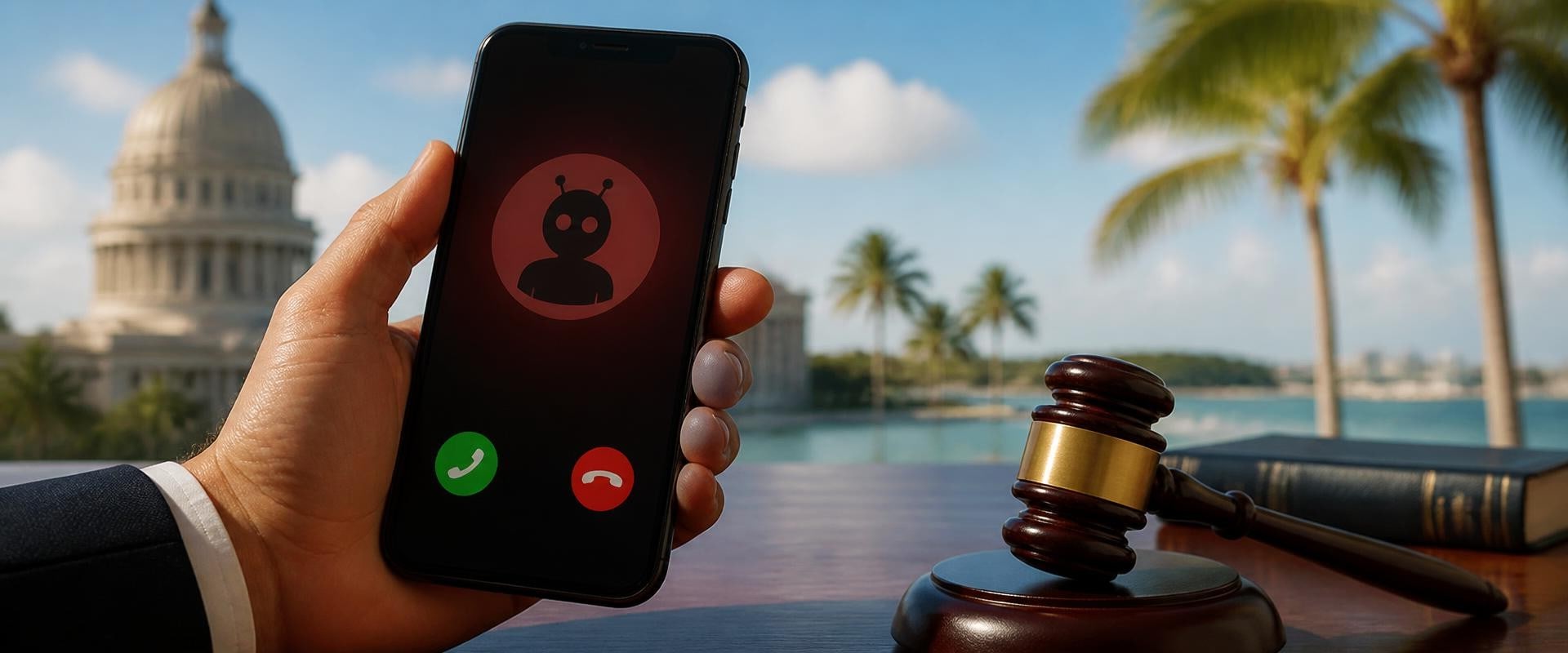
Florida has enacted telephone solicitation rules that extend beyond certain federal requirements.
The Florida Telephone Solicitation Act, found in section 501.059 of the Florida Statutes, addresses automated sales calls, text messages, prerecorded communications, consumer consent, and unwanted solicitations.
These protections are important because a marketing communication may raise state-law concerns even when a claim under the federal autodialer provision is difficult to establish.
Consumers should review both legal frameworks before determining whether they have a potential claim.
How Florida regulates automated sales calls
Florida restricts specified unsolicited telephonic sales calls involving an automated system for selecting and dialing telephone numbers or playing recorded messages.
The law generally requires prior express written consent for covered communications.
Florida's statutory language also addresses certain text messages and voicemail transmissions.
What qualifies as written permission?
Florida defines prior express written consent through a written agreement containing particular disclosures.
The authorization must identify the number to be contacted and clearly describe the covered communications.
Electronic signatures or other qualifying affirmative acts may satisfy the signature requirement.
However, a consumer's telephone number appearing in a business database does not, by itself, establish valid written consent.
The circumstances of the authorization matter.
Marketing texts and prerecorded voicemails
Florida's definition of a telephonic sales call includes more than an ordinary telephone conversation.
Certain messages sent by text or voicemail can fall within the state law.
This makes the message's purpose important.
A promotional communication may face different restrictions from a notice primarily related to an existing account or contract.
Florida calling limits and consumer requests
Florida law establishes additional requirements governing telephone solicitation.
These include restrictions concerning the frequency and timing of specified sales communications.
The state also provides protections for consumers who tell businesses not to contact them.
Why a direct stop request matters
A consumer can inform a solicitor that further outbound communications are unwanted.
Under applicable provisions, businesses must respect covered no-contact requests.
Preserving a text or written request can help establish when the instruction was communicated.
If calls continue, the consumer should document each later communication separately.
Local spotlight: Florida maintains a state Do Not Call framework
Florida operates its own telephone solicitation registration system alongside federal protections.
The state statute also addresses the use of federal registry information.
Consumers should check their registration status and keep evidence of relevant requests.
Registration does not make every unexpected call unlawful because statutory exceptions may apply.
Florida lawsuits and potential damages
Florida's statute provides a private right of action for specified violations, subject to statutory requirements and defenses.
Certain claims may permit $500 in damages and potential enhancement for willful conduct.
However, a consumer should not assume that every unsolicited communication generates $500 under Florida law.
The covered conduct, notice requirements, exemptions, and other conditions must be reviewed.
To learn more, visit: https://robocalllawsuit.com/autodialer-laws/
Common questions around Florida robocall laws
Does Florida require written consent for automated sales calls?
Florida generally requires prior express written consent for specified automated unsolicited telephonic sales calls.
Can Florida law apply to promotional texts?
Yes. Covered telephonic sales calls can include text messages.
Are all Florida marketing calls limited to the same rules?
No. Restrictions depend on the type of call, purpose, and applicable exceptions.
Can a consumer sue a Florida telemarketer?
Potentially, when the facts satisfy the state's private enforcement provisions.
Can federal law apply at the same time?
Yes. A communication may raise separate federal and state issues.


