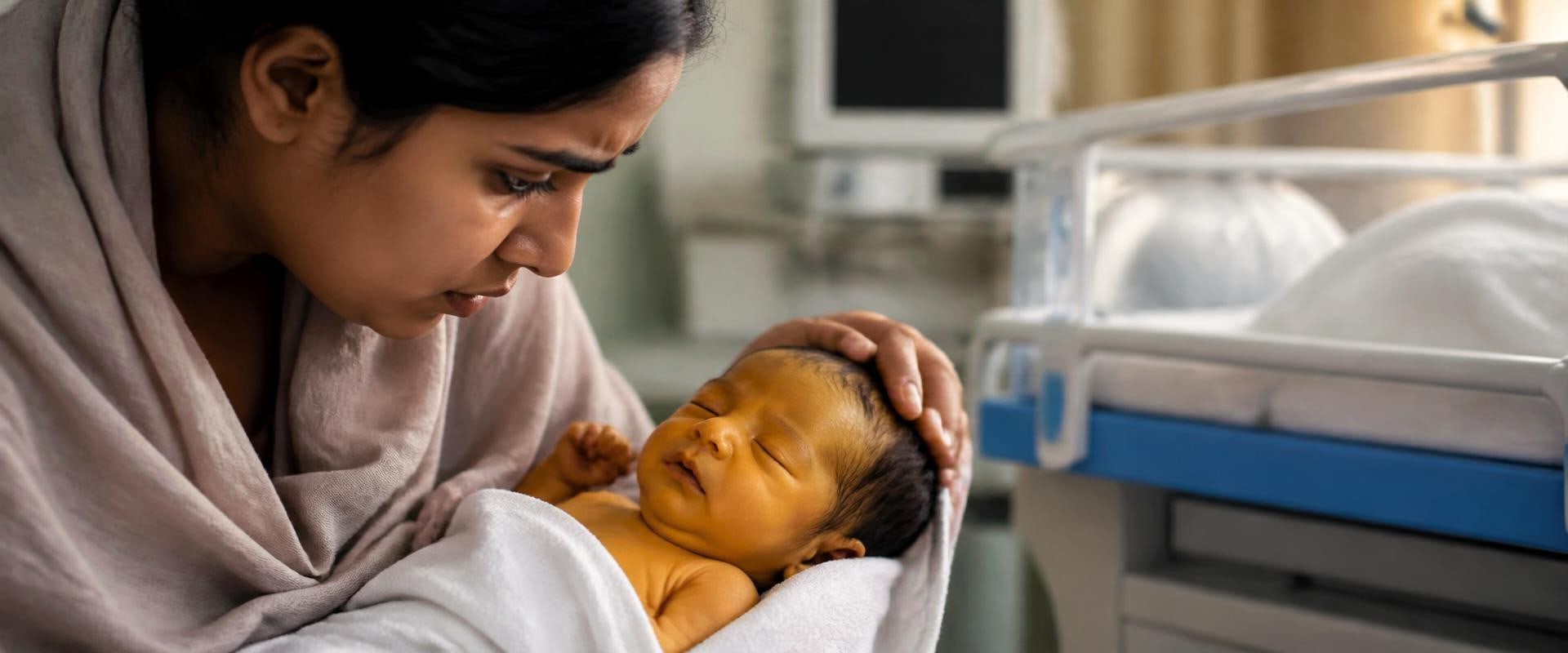
Newborn jaundice is common, but severe cases can become dangerous without proper monitoring. When bilirubin rises to toxic levels, it may injure the developing brain and cause kernicterus. Understanding how jaundice progresses and when treatment becomes necessary can help families recognize potentially serious complications.
Understanding the difference between jaundice and kernicterus
Jaundice describes the yellow appearance of the skin and eyes caused by bilirubin accumulation.
It frequently occurs during the first several days after birth.
The condition is especially common because newborns produce bilirubin relatively quickly while their livers are still developing.
Most infants process the excess bilirubin without lasting problems.
Kernicterus is different.
It develops when excessive unconjugated bilirubin causes permanent neurological injury.
A baby can have jaundice without developing kernicterus, but kernicterus is associated with severe bilirubin toxicity.
The purpose of newborn jaundice screening is to identify infants who need treatment before dangerous complications occur.
Why bilirubin may rise after hospital discharge
Bilirubin levels often reach their highest point several days after birth.
For many babies, this occurs after they have already returned home.
This timing makes discharge planning especially important.
Healthcare professionals should evaluate bilirubin levels and identify factors that may increase the risk of significant jaundice.
Families should receive instructions about feeding, follow-up appointments, and warning signs.
A newborn discharged early may need another bilirubin measurement soon afterward.
The timing depends on the infant's age, bilirubin level, gestational age, and other clinical findings.
A missed follow-up appointment can create problems when bilirubin continues to rise without detection.
Medical conditions that increase risk
Several medical conditions can contribute to excessive bilirubin production or slower elimination.
Blood-type incompatibility between mother and baby can cause accelerated destruction of red blood cells.
Premature birth increases risk because the liver is less mature.
An inherited condition called glucose-6-phosphate dehydrogenase deficiency, or G6PD deficiency, can also increase the risk of severe jaundice.
Babies with significant bruising after delivery may produce additional bilirubin as the bruised blood breaks down.
Inadequate feeding can contribute to increased bilirubin levels by reducing normal elimination.
These risk factors do not guarantee that kernicterus will develop.
They indicate that closer monitoring may be necessary.
When jaundice becomes a medical emergency
A newborn with worsening jaundice should receive medical assessment, particularly when feeding or behavior changes.
Warning signs include difficulty waking, poor feeding, unusual muscle stiffness, limpness, or a high-pitched cry.
Severe symptoms may include seizures, abnormal breathing, and pronounced arching of the back.
Parents should seek emergency medical care if these neurological symptoms occur.
Visual appearance alone cannot establish whether bilirubin is at a dangerous concentration.
Some infants may have significant hyperbilirubinemia without dramatic visible changes.
A measured bilirubin level is essential for determining appropriate treatment.
Treatment options for severe jaundice
Phototherapy is the standard treatment for many newborns whose bilirubin levels exceed recommended thresholds.
Specialized light changes bilirubin into forms the body can eliminate more easily.
Doctors monitor bilirubin during treatment to determine whether levels are responding.
Infants with severe hyperbilirubinemia may require intensive phototherapy and additional medical support.
An exchange transfusion may be necessary when bilirubin reaches critical thresholds or when serious neurological signs develop.
In selected cases involving immune-related red blood cell destruction, intravenous immunoglobulin may be considered.
Treatment decisions must follow the infant's specific medical circumstances.
Did you know? Skin color can make jaundice harder to assess
Yellow discoloration may be less obvious in newborns with darker skin tones.
Lighting conditions can also affect how jaundice appears.
For these reasons, visual inspection is not a reliable substitute for bilirubin measurement.
Objective screening helps identify babies who need treatment, even when visible jaundice is difficult to recognize.
Common questions around untreated jaundice
Can newborn jaundice cause permanent brain damage?
Yes. Severe untreated hyperbilirubinemia can cause kernicterus.
How quickly can jaundice become dangerous?
Bilirubin can rise rapidly in some newborns, especially those with hemolytic disease or other risk factors.
Should parents rely on skin color to monitor jaundice?
No. Bilirubin testing is necessary when medical assessment indicates a risk of significant jaundice.
For more information, visit: https://birthinjuryadvocate.com/birth-injuries/kernicterus/


