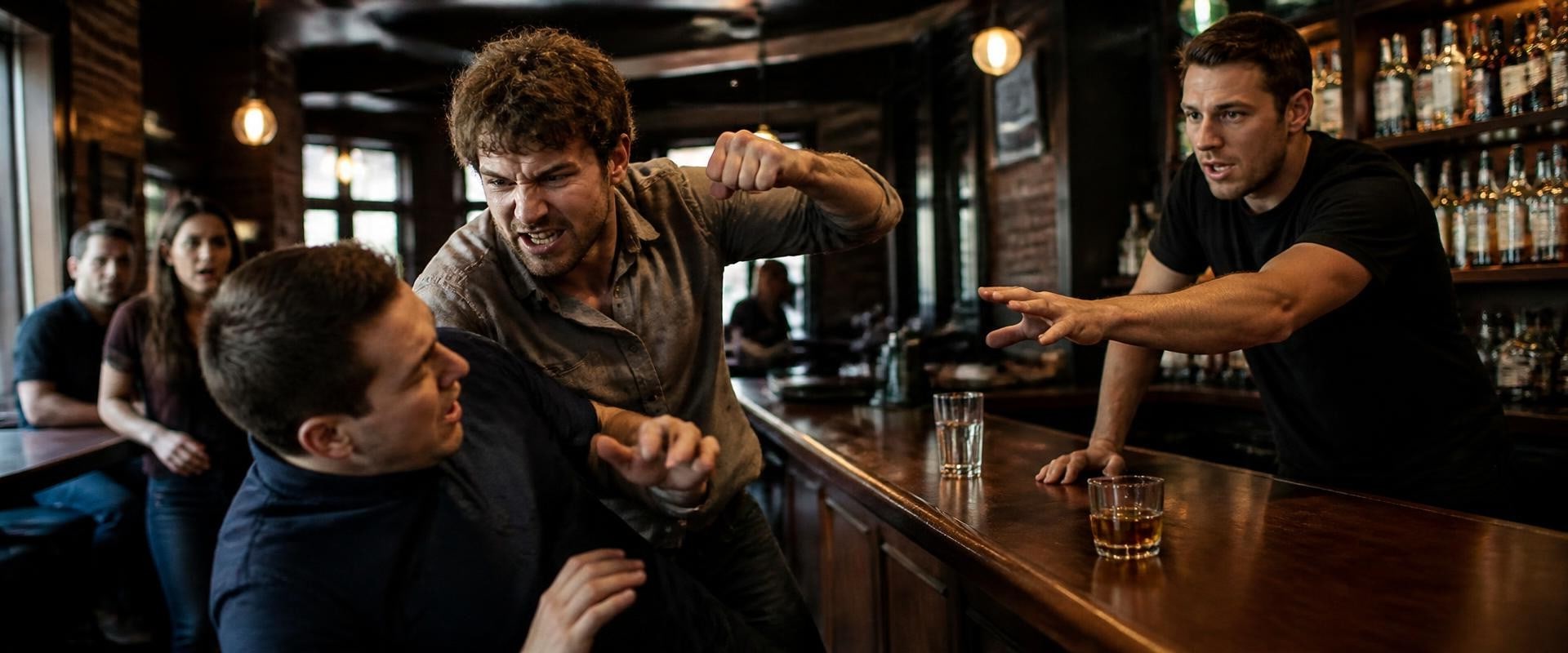
Most people know a bar can get in trouble for serving a minor. Fewer realize that, in many states, a bar can also be held financially responsible when it keeps serving an adult who is obviously drunk, and that person goes on to hurt someone. These rules are known as dram-shop laws, and they can matter a great deal to anyone injured in a fight, stabbing, or shooting connected to a bar.
Where the name comes from
A "dram" is an old unit for a small amount of liquor, and a "dram shop" was a place that sold it by the glass. The name stuck to the laws that govern a seller's responsibility for harm caused by the alcohol it served.
The basic idea
Dram-shop laws make alcohol vendors answerable, in certain situations, for injuries caused by customers they over-served. The textbook example is a bar that continues pouring for a patron who is plainly intoxicated, and that patron then starts a violent confrontation or causes a crash. Under these laws, the bar may share responsibility for the resulting harm.
The key phrase in many states is "visibly intoxicated." The question is often whether staff could see, from the person's speech, balance, behavior, or appearance, that they had already had too much, and served them anyway. Many laws also address serving minors.
Every state does it differently
This is one of the most varied areas of personal injury law. Some states have broad dram-shop statutes. Others limit liability to narrow situations, such as service to minors or to people known to be "habitually addicted" to alcohol. A few states do not allow dram-shop claims at all. Proof requirements, damage rules, and filing deadlines can differ too.
Given that patchwork, any review has to match the details of the incident to the specific rules where it occurred.
How dram-shop and negligent-security claims fit together
When over-service leads to a fight or shooting, the bar may have failed in more than one way. A dram-shop theory focuses on the alcohol: the venue should not have kept serving. A negligent-security theory focuses on protection: the venue should have had enough trained staff, screened for weapons when warranted, broken up the confrontation, or secured the parking lot.
These two theories often work side by side. A single incident can involve a bartender who ignored obvious intoxication and a security team that was too small to respond. Pursuing both can give a fuller picture of how the venue let its patrons down.
Can I sue the person who hurt me too?
Often, yes. One case can be brought against the attacker personally, and another against the establishment for both pouring too much and protecting too little. In practice, individual attackers frequently lack insurance or assets, which makes the venue's responsibility especially important.
Evidence in an over-service case
Proving over-service usually involves the bar's own records and witnesses: tabs and receipts showing how many drinks were served and when, surveillance footage of the patron at the bar, accounts from other guests, and testimony from servers. Toxicology results may also be relevant. Much of this can be lost if no one acts quickly.
Who may be responsible
Beyond the person who threw the punch, liability may extend to the bar's owner, its operators, and its contracted door staff.
What injured people can recover
Damages can cover medical bills, lost earnings, scarring, and the physical and emotional toll of an attack. In fatal cases, families may pursue wrongful-death damages.
What "visibly intoxicated" can look like
Bartenders and servers are generally trained to recognize when a guest has had too much. Signs often cited include slurred or unusually loud speech, stumbling or needing to lean on the bar, spilling drinks, glassy eyes, sudden mood swings, and picking arguments with strangers. In a dram-shop case, witnesses and video may show the attacker displaying these signs while staff continued to hand over drinks. Point-of-sale data can also reveal a rapid pace of purchases. The more obvious the intoxication, the harder it is for a venue to claim it had no reason to stop serving.
Talk to a firm that evaluates both angles
The Haggard Law Firm reviews nightlife cases for both negligent-security and over-service claims. Close to 500 premises cases have come through the firm. A shooting at a Miami entertainment and retail property with lax protection led to one of its verdicts, $102.7 million, a nationwide record for negligent security. That is a gross figure.
Fees are charged only from a recovery. To learn what your state permits, request a free review through (305) 446-5700.
Attorney advertising for general educational purposes. Dram-shop rules differ across states, so read this as orientation rather than advice; reaching out does not automatically establish representation. Earlier results do not ensure a similar result.