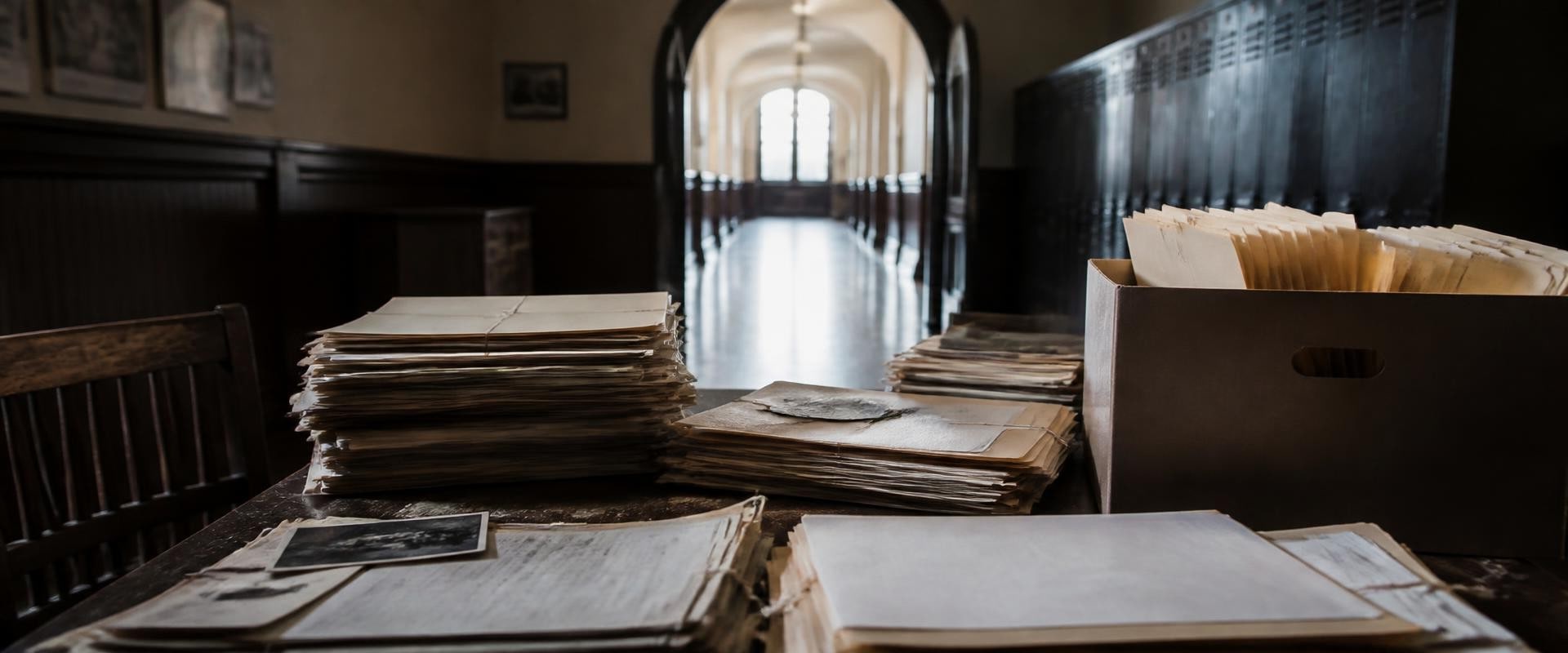
Many survivors of boarding school abuse hesitate because they worry it will come down to their word, decades later, against a respected institution. In practice, these cases tend to rest on something else: the school's own records.
Private boarding schools are often long-established institutions with decades of internal records. Those records can show what the school knew, what it should have known, and what it did. You do not need to have reported the abuse, and nobody needs to have been charged.
Attorney Ervin Nevitt, a partner at Coplan + Crane, reviews these cases. He is registered with the Illinois bar (6319808) and was admitted in 2014.
Why records carry these cases
These cases are built from institutional records rather than from a complete account. That is why remembering only part of what happened is ordinary and is not a barrier. The school's files can fill in much of what memory cannot.
Why boarding schools are different
Residential schooling removes the ordinary safeguard of going home at the end of the day. Supervision is continuous, and so is exposure, and a child has nobody outside to tell. A school responsible for children around the clock carried a heavy duty to watch over them.
Who the claim is against
These claims are usually brought against the school, rather than only against the individual. The theory that most often carries them is negligent supervision. In practice, several theories run together, and which one fits is a question about your facts rather than a category.
Private boarding schools are not public bodies, so the Tort Immunity Act does not apply. The responsible body is usually a private organization, so the Tort Immunity rules that govern claims against Illinois public bodies do not apply in the same way. The liability questions are the ordinary institutional ones.
Common Questions Around Records and Boarding School Claims
It was a long time ago. That is the norm in this work rather than the exception. What governs it is your age at the time, who was responsible, and the particular facts.
What does it cost? Nothing up front. These cases are taken on a contingency fee, so there is no fee if there is no recovery.
What if I only remember part of it? That is ordinary. These cases are built from institutional records rather than from a complete account.
What happens when you contact us
Nothing starts because you ask a question. You speak with a person, not an intake script, and you do not have to describe what happened. We look into which institution was responsible, what it knew, what records exist, and whether a claim can still be brought. That work costs you nothing.
We tell you plainly what is possible. If you decide not to go ahead, it ends there, and what you told us stays confidential. If you go ahead, we carry the filings, deadlines, records, and the institution's insurers. Steps can be taken to protect your identity in the court record.
Call (708) 671-6858 for a free, confidential case review.